The average UK small business operates from just 800-1,200 square feet, yet needs to accommodate reception areas, workstations, meeting rooms, storage facilities, and break areas that larger offices spread across multiple floors.
For growing SMEs, this space constraint creates daily challenges. Teams feel cramped, privacy becomes impossible, client meetings occur in makeshift spaces, and storage overflows into work areas. The visual impact of clutter and overcrowding can undermine client confidence and affect team morale, whilst the practical limitations reduce productivity and create frustration.
The temptation to seek larger premises is understandable, but London office space averaging £70-£90 per square foot makes significant expansion financially challenging for most small businesses. Combined with long lease commitments and relocation costs, many growing companies find themselves trapped between inadequate current space and unaffordable alternatives.
At Corporate Interiors, we’ve helped numerous small businesses transform cramped, inefficient offices into productive, professional environments through intelligent design solutions that maximise every square foot. From strategic partitioning creating privacy without sacrificing openness to mezzanine floors adding functional space vertically, the right design approach can defer expensive relocations whilst improving working conditions.
The key lies in understanding that small office design requires fundamentally different thinking than larger corporate environments. Every design decision must work harder, multi-functional spaces become essential rather than optional, and creative solutions replace the luxury of dedicated single-purpose rooms.
Understanding Small Office Challenges
Common Space Constraints in Small Offices
Limited square footage forces difficult compromises between essential functions. Reception areas compete with workspace for valuable floor space, whilst insufficient private areas make confidential calls and focused work challenging. Meeting rooms that would occupy 150-200 square feet represent 15-20% of total space in small offices, creating difficult allocation decisions.
Storage challenges accumulate as businesses grow, with filing cabinets, supplies, equipment, and personal items gradually consuming workspace. Without systematic storage solutions, clutter dominates surfaces and circulation areas, making offices feel smaller whilst reducing functionality.
The psychological impact extends beyond mere inconvenience. Research by the British Council for Offices demonstrates that overcrowded, poorly designed offices significantly affect employee wellbeing, productivity, and retention. For small businesses where individual employee contributions matter disproportionately, these effects can seriously impact business performance.
The Growth Dilemma: Too Small But Can’t Afford Larger
Growing businesses frequently reach a painful threshold where current space clearly doesn’t work, yet moving to larger premises seems financially impossible or premature. Office expansion typically requires 30-50% more space to justify relocation costs and disruption, but business growth may not yet support this commitment.
Long lease terms create additional complexity. Businesses tied to 3-5 year leases face substantial break costs or must endure unsuitable space until lease expiry. This situation makes optimising existing space through intelligent design particularly valuable, potentially deferring expensive relocations by 12-24 months whilst improving working conditions.
Space Planning Fundamentals for Small Offices
Calculating Your True Space Requirements
Realistic space planning for small offices requires understanding minimum viable allocations whilst maintaining functionality. Individual workstations need 60-80 square feet including desk, chair, and circulation space – significantly less than the 100-120 square feet common in corporate environments.
The 70-20-10 rule provides practical guidance for small office space allocation: 70% for primary workspace including desks and immediate work areas, 20% for collaboration and meeting spaces, and 10% for support functions like storage, kitchen areas, and quiet zones. This differs substantially from larger offices that can dedicate more space to amenity and social functions.
Future growth planning should consider 12-18 month horizons rather than longer-term projections that may prove inaccurate. Designing for modest expansion capability through flexible furniture and adaptable layouts enables growth accommodation without over-committing limited resources to speculative space.
Creating Functional Zones Without Walls
Visual and physical zone definition without solid partitioning maintains open feel whilst providing psychological separation between different functions. Strategic furniture placement, floor covering changes, or ceiling-mounted features can delineate work zones from collaboration areas without consuming space or blocking light.
Traffic flow planning becomes crucial in compact environments where circulation routes must be efficient without feeling cramped. Main pathways should be 36-42 inches wide enabling comfortable passage without excessive space dedication, whilst work zones should avoid becoming thoroughfares that create constant disruption.
Noise management through strategic positioning separates quiet focus work from collaborative activities and social spaces. Placing meeting areas near entrances and break facilities whilst positioning focused workstations in quieter zones improves functionality without requiring expensive acoustic solutions.
Maximising Every Square Foot
Vertical Space Solutions
Floor-to-ceiling storage systems utilise often-wasted vertical space whilst maintaining floor area for essential functions. Custom shelving extending to ceiling height can double storage capacity compared to standard units, whilst creating impressive visual impact that demonstrates organisation and attention to detail.
Mezzanine floors create additional usable space by adding second levels for storage, quiet work areas, or meeting spaces. In offices with ceiling heights exceeding 3.5-4 metres, mezzanine installation can increase usable square footage by 30-50% at costs substantially lower than relocating to larger premises.
Wall-mounted desks and floating workstations eliminate bulky desk legs whilst creating clean, contemporary aesthetics that make spaces feel larger. These solutions work particularly well for laptop-based work where traditional desk storage becomes unnecessary through digital document management.
High shelving and overhead storage in circulation areas utilises space that serves no other productive purpose. Archive boxes, seasonal items, or infrequently needed supplies can be stored overhead without affecting daily operations or consuming valuable work areas.
Smart Storage That Doesn’t Dominate
Under-desk storage through pedestal units or integrated drawers keeps necessary items accessible whilst maintaining clean surfaces that prevent visual clutter. Mobile pedestals provide flexibility for hot desking environments whilst offering personal secure storage.
Built-in storage integration creates seamless appearances whilst maximising efficiency. Custom storage solutions fitted to irregular spaces or awkward corners utilise areas that standard furniture cannot accommodate, whilst creating cohesive aesthetics that make offices feel intentionally designed rather than haphazardly furnished.
Digital document management reduces physical filing requirements that historically consumed substantial small office space. Cloud-based systems combined with digital signature capabilities can eliminate 60-80% of physical filing needs, freeing space for more productive uses.
The Power of Partitioning in Small Spaces
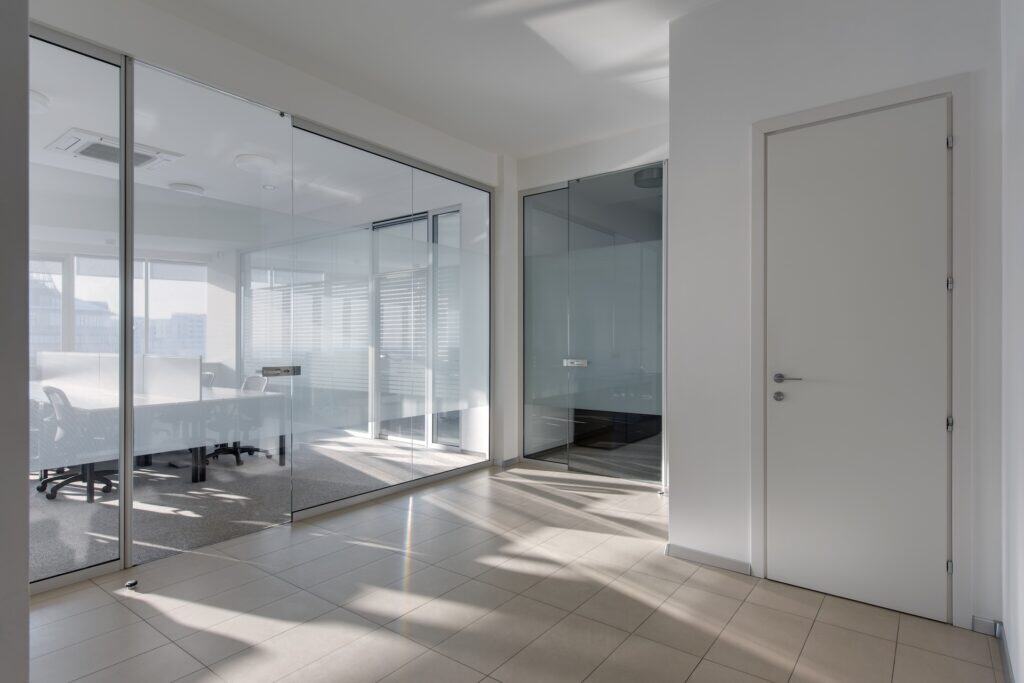
Glass partitions maintain visual spaciousness whilst providing acoustic separation and privacy when needed. Full-height glass walls create actual rooms for confidential meetings or focused work without the closed-in feeling of solid partitions that can make small offices feel claustrophobic.
Half-height partitions effectively define zones without blocking sightlines or natural light. Desk-height or standing-height partitioning can separate workstations whilst maintaining open atmospheres and enabling supervision or collaboration when beneficial.
Modular partition systems provide adaptability as business needs evolve. Demountable partitions can be reconfigured, relocated, or removed without the waste and expense of traditional construction, protecting investment whilst enabling change.
Sliding or movable partition systems allow spaces to transform throughout the day. A large open area might become several small meeting rooms during peak collaboration hours, then reopen for company gatherings or training sessions. This versatility multiplies space utility without requiring additional square footage.
Clever Corner and Awkward Space Usage
Corner desks and L-shaped workstations utilise often-wasted corner areas whilst providing generous work surfaces within compact footprints. These configurations can create executive-style workspace within square footages that wouldn’t accommodate traditional desk arrangements.
Irregular spaces created by building structures often become dead zones in poorly planned offices. Strategic furniture specification or custom solutions can transform alcoves, under-stair areas, or awkward corners into functional storage, quiet work spots, or even compact meeting areas.
Window bay opportunities often go unused despite offering pleasant working conditions with natural light and views. Small desk spaces or informal seating in bay areas creates desirable workspace that doesn’t consume primary floor area.
Essential Spaces in Compact Offices
Reception Areas Without Sacrificing Space
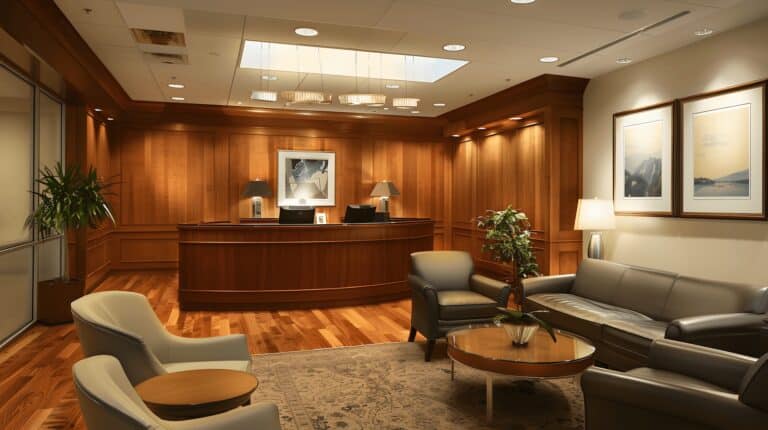
Compact reception desks measuring 48-60 inches provide professional first impressions without dominating limited square footage. Modern reception designs often incorporate slim profiles with wall-mounted elements rather than substantial freestanding furniture that consumes space.
Combined reception and workspace designs enable reception staff to perform administrative duties when not greeting visitors, eliminating the dedicated reception area that sits empty most of the time in small offices. This dual-purpose approach maintains professional presentation whilst maximising efficiency.
Waiting areas in small offices should avoid dedicating permanent space to seating that’s rarely occupied. Instead, position comfortable chairs near reception that can be relocated when needed, or utilise informal seating that serves multiple purposes throughout the day.
Self-service check-in through tablets or simple sign-in sheets reduces reception desk size requirements whilst maintaining professional visitor management. Digital systems can notify staff of visitor arrival without requiring dedicated reception personnel for small offices with limited reception traffic.
Meeting Spaces in Limited Square Footage
Phone booths and privacy pods occupying just 15-25 square feet provide essential private space for calls, video conferences, or focused work. These compact solutions address the most common small office complaint – lack of privacy for confidential conversations – without consuming meeting room-level space.
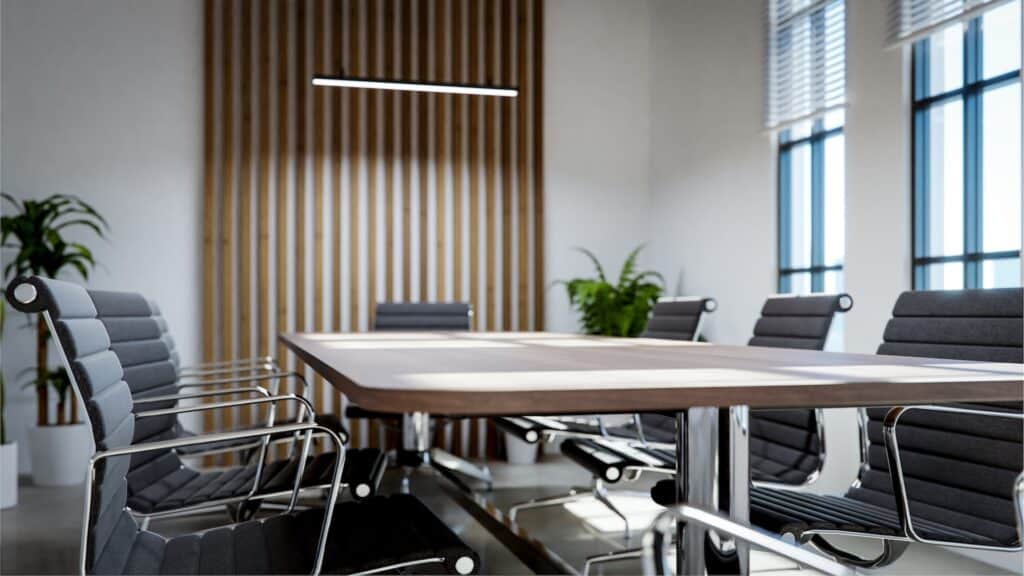
Small meeting rooms for 4-6 people serve multiple purposes from client meetings to team discussions and video conferences. Rather than building separate spaces for different meeting types, design versatile rooms with quality video conferencing technology and flexible furniture supporting various configurations.
Convertible spaces that transform into meeting areas when needed maximise utility from limited square footage. Break areas with appropriate furniture can become informal meeting spaces, whilst open workspace areas might accommodate standing meetings or team huddles without requiring dedicated rooms.
Individual Workstations That Don’t Dominate
Compact desk sizing at 48-60 inches rather than traditional 72-inch depths creates functional workspace whilst reducing footprint by 30-40%. Modern laptop-based work requires less surface area than traditional desktop computing, enabling efficient sizing without compromising productivity.
Desk sharing and hot desking arrangements enable more employees than available workstations by eliminating assigned seating. For businesses with hybrid working patterns or field-based roles, desk ratios of 0.6-0.8 desks per employee can provide adequate workspace.
Bench seating configurations where multiple employees share continuous work surfaces without individual desk divisions increase capacity by 15-25% compared to separate desks. These arrangements work well for collaborative teams whilst reducing costs and space requirements.
Break Areas and Social Spaces
Compact kitchen solutions using galley layouts concentrate necessary appliances and storage within minimal footprint. A functional office kitchen can occupy just 40-60 square feet whilst providing refrigerator, microwave, coffee facilities, and washing facilities that support team needs.
Combination social and meeting areas serve dual purposes throughout the day. Spaces designed for lunch breaks and informal conversation can accommodate team meetings, training sessions, or client presentations when configured appropriately.
Coffee stations positioned strategically throughout offices create social catalyst points without dedicating space to formal break rooms. Well-designed coffee points with small seating clusters encourage brief informal interactions that build team cohesion whilst consuming minimal space.
Visual Tricks That Make Spaces Feel Larger
Colour Strategies for Small Offices
Light colours expand perceived space by reflecting more light and creating airy atmospheres. White, off-white, light grey, and pale blue tones make rooms feel significantly larger than dark colours that absorb light and create closed-in feelings.
Strategic accent walls using deeper colours create depth perception without overwhelming spaces. One feature wall in darker or bolder colour draws the eye whilst maintaining overall lightness that preserves spacious feelings.
Colour zoning helps define different functional areas without physical partitioning. Subtle colour variations between work zones, collaboration areas, and social spaces provide visual organisation whilst maintaining cohesive overall aesthetics.
Lighting Design for Spaciousness
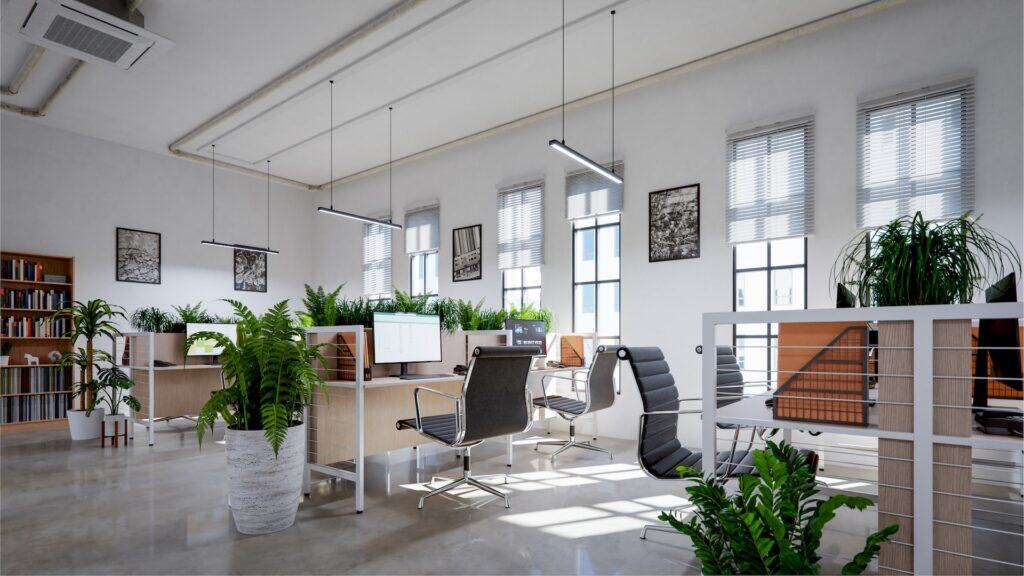
Natural light maximisation should be the primary lighting strategy in small offices. Avoiding window obstruction, using light window treatments, and positioning workstations to benefit from daylight creates pleasant environments whilst making spaces feel larger and more open.
Layered lighting combining ambient, task, and accent lighting creates dimension that makes spaces feel larger than single-source overhead lighting. Multiple light sources at different heights create visual interest whilst enabling appropriate illumination for different activities.
Strategic up-lighting directing light toward ceilings creates height perception by drawing eyes upward. This technique can make standard ceiling heights feel more generous whilst adding sophisticated architectural interest to simple spaces.
Mirrors positioned opposite windows or reflecting light sources effectively double perceived space and brightness. Strategic mirror placement can dramatically improve small office ambiance, though positioning should avoid creating distracting reflections of computer screens or work areas.
Glass and Transparency Maintaining Openness
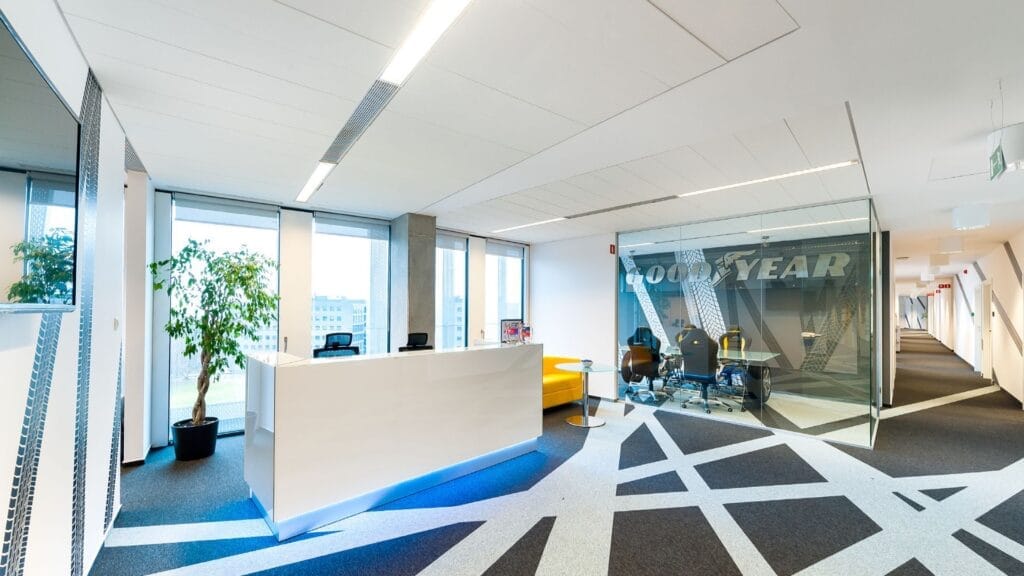
Glass partitions instead of solid walls maintain visual connectivity whilst providing acoustic separation and privacy. Floor-to-ceiling glass creates actual enclosed rooms without the closed-in feeling that solid walls create in compact spaces.
Frosted or smart glass provides privacy when needed without permanently blocking light or creating visual barriers. Switchable smart glass enables rooms to transform from open and transparent to private and obscured based on immediate needs.
Glass doors throughout offices maintain sightlines and light flow whilst providing acoustic separation between different areas. Even internal offices without windows feel less claustrophobic when glass doors enable visual connection to broader office environments.
Technology Integration in Small Offices
Space-Saving Technology Solutions
Cloud-based systems eliminate server rooms and substantial IT infrastructure that historically consumed valuable small office space. Modern businesses can operate entirely on cloud platforms without dedicated equipment rooms, freeing 50-100 square feet for productive uses.
Wireless technology reduces cable clutter whilst enabling flexible furniture arrangements that aren’t constrained by fixed power and data outlet locations. WiFi, wireless keyboards and mice, and wireless printing eliminate the tangled cables that create visual disorder in small spaces.
Multi-function devices combining printing, scanning, copying, and faxing reduce equipment footprint by 60-75% compared to separate devices. A single quality multi-function device serves most small office needs whilst occupying just 3-4 square feet.
Digital displays replace physical noticeboards, eliminating wall clutter whilst providing dynamic information sharing. Digital signage for company announcements, meeting room booking, or wayfinding information maintains professional appearance whilst reducing physical clutter.
Essential Tech for Efficient Small Offices
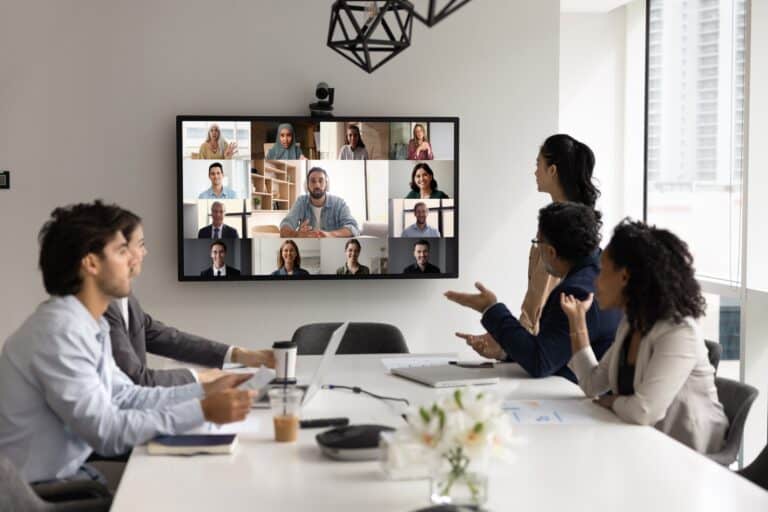
Video conferencing systems reduce meeting room requirements by enabling remote meetings that don’t require physical space. Quality video technology can eliminate 30-50% of meeting room demand whilst supporting flexible working arrangements that reduce overall office space needs.
Collaboration platforms reduce physical document storage and filing requirements that historically dominated small office space. Digital document sharing, cloud storage, and project management platforms can eliminate most physical filing needs that previously consumed substantial square footage.
Desk booking systems for hot desking environments optimise space utilisation whilst preventing conflicts over workspace. Simple booking platforms enable fewer desks than employees without creating daily battles for available workstations.
Industry-Specific Small Office Solutions
Professional Services: Law, Accounting, Consulting
Document storage and security requirements create particular challenges for professional services in small offices. Combining secure physical storage for essential documents with digital systems for most files balances compliance requirements with space efficiency. Lockable filing cabinets for client files might occupy 20-30 square feet whilst digital systems handle 80% of document storage needs.
Private client meeting spaces prove essential for professional credibility despite limited square footage. A single well-designed 100-square-foot meeting room serving multiple purposes provides better value than attempting to create several small spaces that feel cramped and unprofessional.
Professional image in limited space requires particular attention to reception areas, visible workspace organisation, and overall aesthetics. Quality finishes in client-facing areas whilst more economical solutions in back-of-house spaces optimises budget whilst maintaining necessary professional presentation.
Creative and Design Studios
Large work surfaces for design work, layout, or creative collaboration can be achieved through modular table systems that reconfigure based on project needs. Rather than permanent oversized desks, flexible table arrangements provide necessary surface area when required whilst enabling space for other uses.
Material and sample storage requires systematic organisation in creative environments where these items accumulate rapidly. Dedicated shelving systems with clear organisation prevent creative materials from overwhelming workspace whilst keeping them accessible for client presentations or project development.
Portfolio and work showcase displays demonstrate capabilities to clients whilst serving as inspiring environments for creative teams. Wall-mounted displays or digital portfolios consume minimal space whilst creating professional presentation capabilities.
Budget-Smart Small Office Design
Where to Invest Your Limited Budget
Quality seating represents the most important investment for small office environments where employees spend long hours at desks. Ergonomic chairs costing £300-£600 prevent health issues whilst improving productivity, justifying higher investment than other furniture elements.
Adequate lighting creates immediate impact on working environment quality and productivity. LED lighting systems with appropriate controls typically cost £2,000-£5,000 for small offices whilst dramatically improving conditions and reducing ongoing energy costs.
Key partitioning for privacy and acoustic control addresses the most common small office complaint – lack of private space. Strategic investment in 1-2 glass partition installations costing £3,000-£8,000 can transform office functionality whilst maintaining visual spaciousness.
Reception area investment creates critical first impressions that affect client confidence and business credibility. Professional reception furniture and design typically cost £2,000-£5,000 but delivers disproportionate value through client perception and business development impact.
Phased Improvement Strategies
Year one priorities should address essential functionality enabling productive work: adequate desks, basic storage, functional meeting space, and necessary technology. Budget £10,000-£20,000 for foundational improvements that create viable working environment.
Year two upgrades focus on comfort and efficiency: quality seating, improved lighting, acoustic treatments, and enhanced technology. Additional investment of £8,000-£15,000 builds on functional foundation to improve daily experience and productivity.
Year three aesthetic improvements and nice-to-have elements like upgraded break facilities, decorative elements, or premium finishes complete transformation. Final £5,000-£10,000 investment creates polished professional environment.
This phased approach spreads office improvement costs across multiple financial periods whilst delivering incremental value, maintaining cash flow, and enabling strategy adjustment based on business evolution.
When to Consider Bigger Space vs Optimisation
Signs You’ve Outgrown Your Space
Persistent overcrowding despite optimisation efforts indicates genuine space inadequacy rather than inefficient use. When employees lack adequate workspace even with efficient layout and multi-functional areas, expansion becomes necessary rather than optional.
Health and safety concerns about overcrowding, inadequate ventilation, or insufficient emergency exits represent serious issues requiring immediate attention. Regulatory compliance cannot be compromised through overcrowding, making expansion essential when optimisation cannot address these concerns.
Client perception suffering due to cramped, unprofessional conditions affects business development and revenue. When space limitations actively lose business opportunities or damage client relationships, investment in larger premises may deliver better returns than accepting ongoing business impact.
Making the Move vs Optimise Decision
Cost analysis comparing optimisation investment against relocation expenses typically reveals optimisation delivering 60-70% of expansion benefits at 30-40% of relocation costs. However, this calculation depends on how close current space is to genuine capacity limits.
Business growth trajectory and certainty affect the decision significantly. Rapid, certain growth justifies relocation investment, whilst uncertain or gradual growth favours optimisation that defers commitment whilst improving current conditions.
Lease timing often determines practical options. Approaching lease expiry creates natural opportunity for relocation consideration, whilst years remaining on current lease makes optimisation more attractive by avoiding break costs.
Transform Your Small Office Into Productive Space
Small office design presents unique challenges that require creative solutions, strategic thinking, and willingness to embrace multi-functional spaces over single-purpose luxury. However, intelligent design can transform cramped, frustrating environments into productive, professional workspaces that support business growth without requiring expensive relocation.
The key lies in maximising every square foot through vertical space utilisation, strategic partitioning, smart storage solutions, and multi-functional areas that serve different purposes throughout the day. Visual tricks using light colours, glass partitions, and appropriate lighting can make spaces feel significantly larger whilst maintaining functionality.
Technology integration enables space savings that weren’t possible historically, with cloud systems, wireless connectivity, and digital collaboration platforms reducing physical infrastructure requirements. These investments often provide dual benefits of space efficiency and operational improvement.
At Corporate Interiors, we specialise in helping small businesses transform limited spaces into functional, professional environments through strategic design that addresses your specific constraints and requirements. Our experience with flexible partitioning systems,mezzanine floors, and space optimisation enables us to create solutions that maximise every square foot whilst remaining within budget constraints.
Ready to transform your small office into a productive, professional workspace? Contact our small office design specialists for a comprehensive space assessment and expert guidance on maximising your limited square footage through intelligent design solutions.
Schedule your small office consultation and discover how strategic design can help you defer expensive relocation whilst creating an environment that supports team productivity, impresses clients, and accommodates business growth.